


Chapters
Introduction: The Rural ER Reality
Every day, rural hospitals face a challenge that keeps administrators awake at night: how do you deliver exceptional emergency care when resources are stretched thin, and physician coverage is unpredictable?
In rural America, emergency departments serve as the front line of healthcare for entire communities. Yet these same EDs operate under conditions that would be unthinkable in urban settings. Physician shortages, rotating locum coverage, and administrative burdens create a perfect storm that directly impacts the one metric that matters most: patient outcomes.
For CNOs and ED directors navigating these challenges daily, there's good news: strategic staffing isn't just about filling shifts. It's a powerful lever for improving patient care, boosting team morale, and strengthening your hospital's role in the community.
Let's explore how the right staffing strategy transforms care for the better.

Why Do Rural ERs Struggle with Patient Outcomes?
The challenges facing rural emergency departments aren't new, but they're becoming more acute. Understanding these obstacles is the first step toward solving them.
The Physician Shortage Crisis
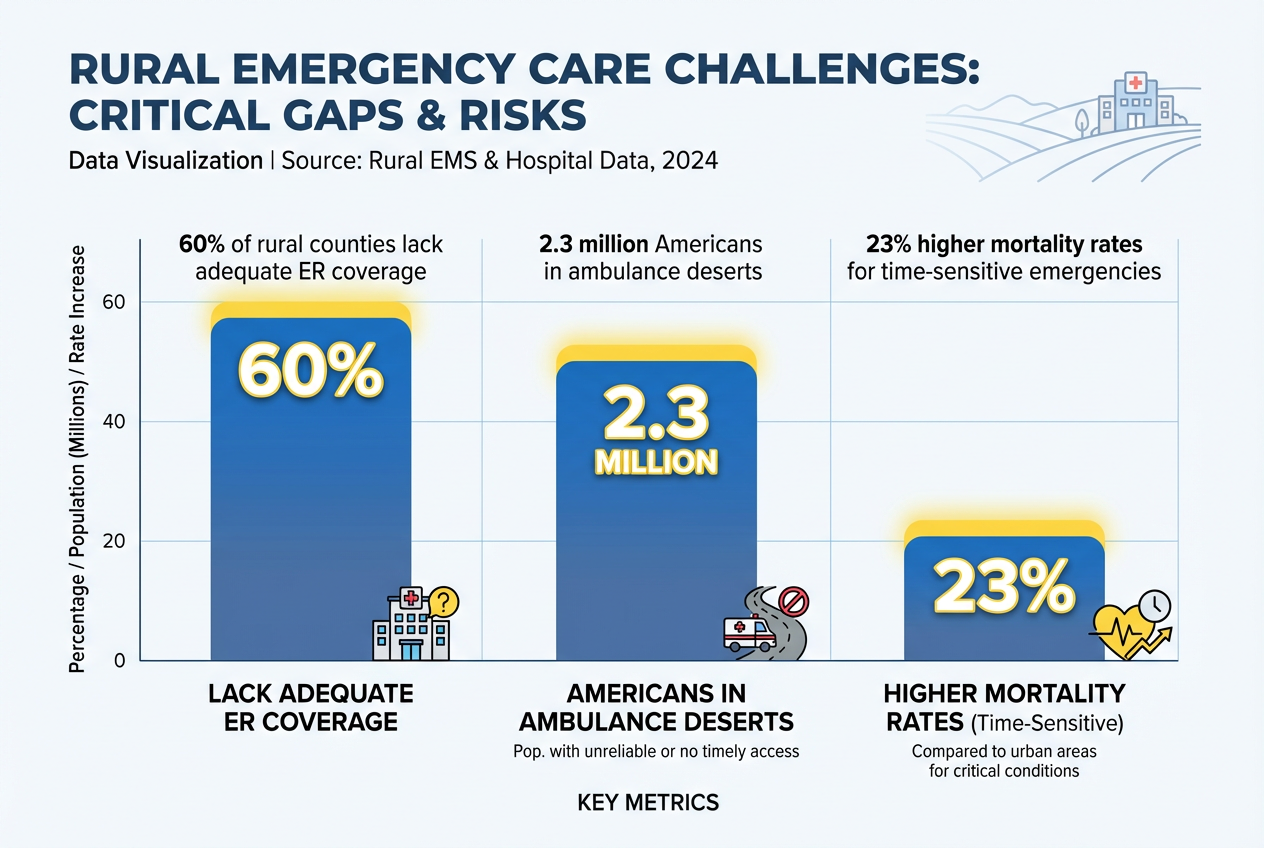
According to the Association of American Medical Colleges (AAMC), rural communities face disproportionate physician shortages compared to urban areas. The Health Resources and Services Administration (HRSA) designates over 60% of rural counties as Health Professional Shortage Areas (HPSAs) for primary care.
For emergency departments specifically, this means:
- Difficulty recruiting qualified emergency physicians who understand rural healthcare delivery
- Heavy reliance on locum tenens physicians who rotate through without building community connections
- Burnout among existing staff who shoulder excessive on-call burdens
- Competition with larger urban systems that can offer higher salaries and more resources
Inconsistent Coverage Models
Many rural hospitals patch together ER coverage using whatever physicians are available. This might include:
- Rotating locum providers who work a few shifts and disappear
- Part-time physicians with no long-term commitment to the facility
- Overworked hospitalists pulling double duty in the ED
- Emergency medicine residency graduates seeking short-term positions
While these physicians may be clinically competent, the lack of continuity creates serious problems for patient care.
The Direct Impact on Patient Outcomes
Research from the Rural Health Research Gateway shows that rural patients experience measurably worse outcomes in time-sensitive emergencies compared to their urban counterparts. According to the Rural Health Information Hub, approximately 2.3 million Americans live in "ambulance deserts," areas where emergency medical services cannot reach them within a reasonable time frame.
The consequences are real and measurable:
- Delayed treatment initiation when physicians aren't familiar with facility protocols
- Lower continuity of care leads to fragmented patient experiences
- Higher mortality rates in cardiac arrest, stroke, and trauma cases (CDC Rural Health Data)
- Decreased patient satisfaction scores due to a lack of physician-patient rapport
- Increased medical errors when handoffs occur between unfamiliar providers
For hospital administrators, these aren't just statistics. They represent real patients in your community who deserve better, and they directly impact your facility's financial health through reimbursement penalties and reputation damage.
What Is Strategic Staffing and Why Does It Matter?
Strategic staffing moves beyond the transactional model of "find a warm body to cover the shift." Instead, it treats physician staffing as a core component of your hospital's clinical excellence strategy.
Strategic Staffing vs. Reactive Shift-Filling
Reactive Shift-Filling focuses on:
- Plugging gaps in the schedule at the last minute
- Prioritizing availability over fit
- Treating physicians as interchangeable units
- Managing crises rather than preventing them
Strategic Staffing emphasizes:
- Alignment with community and facility needs – matching physician expertise to your patient population
- Clinical expertise AND interpersonal fit – ensuring physicians mesh well with your nursing staff and hospital culture
- Continuity and relationship-building – fostering long-term commitments rather than one-off assignments
- Proactive planning – scheduling months in advance to eliminate last-minute scrambles
The Components of a Strategic Approach
Effective strategic staffing includes several key elements:
- Cultural Alignment Not every emergency physician thrives in a rural setting. Strategic staffing identifies physicians who genuinely want to serve rural communities and understand the unique challenges and rewards of rural emergency medicine.
- Comprehensive Onboarding: Instead of throwing new physicians into shifts without preparation, strategic staffing includes:
- Facility tours and protocol reviews
- Introductions to nursing staff and specialists
- Clear communication about community demographics and common presentations
- Personal accompaniment during initial shifts
- Relationship-Based Model Strategic staffing partners view themselves as extensions of your administrative team, not vendors. They invest time understanding your facility's needs, culture, and goals.
- Flexible Staffing Models Rather than one-size-fits-all contracts, strategic staffing offers:
- A mix of full-time and part-time physicians based on volume patterns
- Surge capacity for high-census periods
- Built-in backup coverage for physician illness or emergencies
How Strategic Staffing Impacts Patient Outcomes
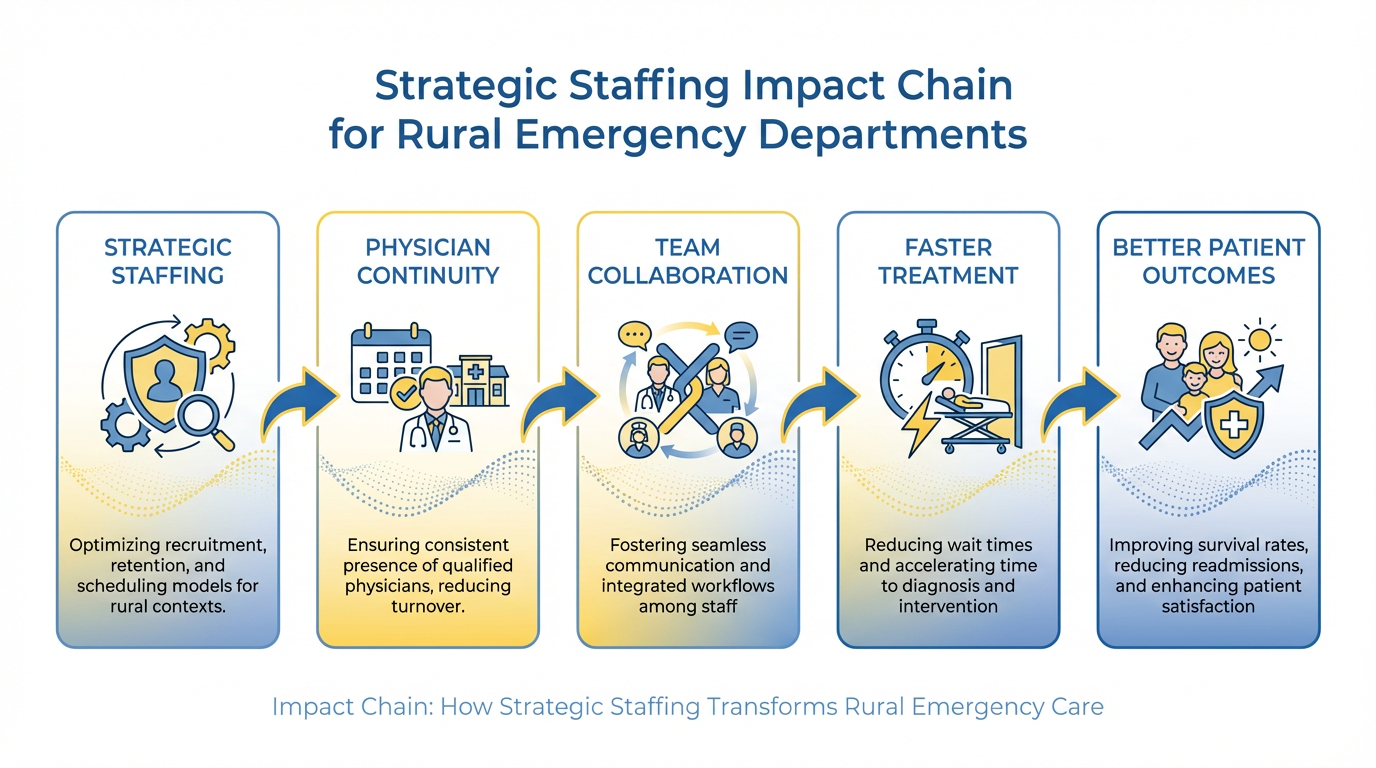
When done right, strategic staffing creates a cascade of positive effects:
Improved Team Collaboration: Physicians who work consistent shifts develop trust and communication rhythms with nursing staff. This leads to:
- Faster clinical decision-making
- Smoother handoffs between providers
- Better utilization of nursing expertise
- Increased staff morale and retention
Reduced Handoff Risks According to Joint Commission data, communication failures during patient handoffs contribute to over 80% of serious preventable adverse events. When the same physicians work regularly at your facility, they:
- Maintain better continuity for multi-visit patients
- Develop institutional knowledge about recurring issues
- Build relationships with specialists for smoother consultations
Higher Patient Satisfaction Patients notice when their ER physician seems comfortable and confident in the environment. Strategic staffing delivers:
- Physicians who know the facility's capabilities and limitations
- Consistent quality of care regardless of which shift a patient arrives
- Better communication as physicians become familiar with community norms and expectations
Measurable Quality Metrics: Facilities that implement strategic staffing often see improvements in:
- Door-to-doctor times
- Length of stay in the emergency department
- Patient satisfaction scores (Press Ganey, HCAHPS)
- Core measure compliance for time-sensitive conditions (sepsis, STEMI, stroke)
Real Results: How the Right Partner Drives Better Care
The difference between transactional staffing and strategic partnership becomes clear when you examine actual outcomes.
What Strategic Staffing Partners Deliver
When you work with a staffing partner who truly understands rural emergency medicine, you can expect:
Shorter Time-to-Treatment: Physicians who are familiar with your ED layout, equipment, and protocols can move faster. They know:
- Where critical supplies are located
- Which specialists are available for consultation
- How to navigate your EHR system efficiently
- Local EMS protocols and handoff procedures
Higher Staff Retention: Your nursing staff will notice the difference immediately. When physicians are:
- Respectful and collaborative
- Consistent and reliable
- Knowledgeable about the facility
- Supportive of nursing autonomy
Nurses are more likely to stay in their positions, reducing your overall staffing burden and maintaining institutional knowledge.
Smoother Transitions of Care Strategic staffing reduces the chaos of shift changes and patient handoffs by ensuring:
- Clear communication protocols
- Physicians who understand your hospital's admission criteria
- Consistent documentation standards
- Established relationships with inpatient teams
Consistent Quality Metrics Rather than wild fluctuations based on which locum physician happens to be working, strategic staffing delivers predictable, high-quality care across all shifts.
Case Example: The Impact of Continuity
Consider two scenarios:
Scenario A: Rotating Locum Model A rural ED relies on a different locum physician every few weeks. Each physician:
- Needs orientation to the facility
- Has different practice patterns and documentation styles
- Lacks relationships with nursing staff and specialists
- Leaves before building any community connection
Result: Nursing frustration, inconsistent care quality, patient complaints, and administrative headaches.
Scenario B: Strategic Staffing Model The same rural ED partners with a strategic staffing firm that places 3-4 physicians who work regular, rotating shifts. These physicians:
- Receive comprehensive onboarding and ongoing support
- Build strong working relationships with the nursing team
- Become familiar with community health patterns
- Serve as stable members of the care team
Result: Improved staff morale, better patient outcomes, higher satisfaction scores, and reduced administrative burden.
The difference isn't just anecdotal. It shows up in your quality metrics, your bottom line, and your community's trust in your hospital.
How Do You Choose a Staffing Partner Who Truly Cares About Outcomes?
Not all staffing firms are created equal. As you evaluate potential partners, look for these critical qualities and watch out for common red flags.
Key Qualities to Seek
- Deep Rural Healthcare Understanding Your partner should demonstrate:
- Experience specifically with rural emergency departments, not just general ER staffing
- Understanding of Critical Access Hospital (CAH) regulations and requirements
- Knowledge of rural patient demographics and common presentations
- Awareness of the unique challenges rural facilities face
- Track Record with ER-Specific Placements: Ask potential partners:
- How many rural ERs do you currently staff?
- What is your average physician retention rate?
- Can you provide references from similar-sized facilities?
- How do you measure success beyond shift coverage?
- Commitment to Long-Term Relationships Look for evidence of:
- Physicians who commit to facilities for years, not just months
- Partnership approach rather than vendor mentality
- Willingness to customize solutions for your specific needs
- Investment in physician satisfaction and support
- Responsive Problem Resolution: Emergencies don't wait for business hours. Your partner should offer:
- 24/7 availability for urgent coverage needs
- Fast response times when issues arise
- Direct communication with decision-makers
- Proactive problem-solving rather than reactive crisis management
- Focus on Cultural Fit: The best staffing partners prioritize:
- Thorough screening for rural practice compatibility
- Personal interviews to assess interpersonal skills
- In-person orientation and onboarding
- Ongoing feedback loops with nursing staff and administration
Red Flags to Avoid
Be wary of staffing firms that:
Treat Physicians as Commodities If a firm talks only about "filling shifts" without discussing physician quality, cultural fit, or patient outcomes, they're not thinking strategically.
Offer Only Short-Term Locum Solutions While locum coverage has its place for emergencies, relying exclusively on rotating physicians prevents the continuity that drives better outcomes.
Lack Engagement with Outcomes Ask about patient satisfaction scores, quality metrics, and nursing feedback. If your potential partner can't speak to these issues, they're not focused on what matters.
Provide Slow or Impersonal Communication Rural hospitals need partners who are responsive and accessible. If it takes days to get a callback during the vetting process, imagine what it will be like when you have an urgent need.
Cannot Demonstrate Rural Healthcare Expertise General staffing firms often struggle to understand the specific challenges of rural emergency medicine. Look for partners with proven rural experience.
Questions to Ask Potential Partners
Before committing to a staffing partnership, ask:
- How do you screen physicians for rural practice suitability?
- What is your process for onboarding physicians to a new facility?
- How do you handle physician performance issues or cultural mismatches?
- What support do you provide to physicians between shifts?
- How do you measure success in your partnerships?
- Can you provide references from current hospital partners?
- What happens if a physician calls out sick or has an emergency?
- How far in advance can you help us schedule coverage?
- Do you offer risk management support?
- What is your approach to credentialing and compliance?
The answers will reveal whether you're talking to a transactional vendor or a strategic partner.
Conclusion: Better Staff. Better Care. Better Lives.
As a rural hospital administrator, you face challenges that would overwhelm many of your urban counterparts. Physician shortages, budget constraints, and the weight of being your community's healthcare lifeline create enormous pressure.
But here's the truth: you have more control than you think.
Strategic staffing is one of the most powerful tools at your disposal for improving patient outcomes, supporting your nursing staff, and strengthening your hospital's position in the community. When you partner with the right staffing firm, you're not just filling shifts. You're building a sustainable emergency department that consistently delivers excellent care.
The Path Forward
The connection between smart staffing and patient outcomes is clear:
- Continuity builds trust between physicians, nurses, and patients
- Cultural fit improves collaboration and reduces friction
- Long-term commitment enables better care than rotating coverage models
- Strategic planning prevents crises rather than reacting to them
You didn't go into healthcare administration to spend your days juggling physician schedules. You're here to ensure your community has access to excellent emergency care.
Strategic staffing helps you do exactly that.
Take the Next Step
If you're ready to explore what better staffing could mean for your emergency department and your patients, we'd welcome the conversation.
At Inspire Medical Staffing, we specialize in rural ER staffing across Kentucky, Tennessee, Ohio, Indiana, West Virginia, and Virginia. As a physician-founded company, we understand both sides of the equation: what hospitals need and what makes physicians successful in rural settings.
We're not just another staffing vendor. We're your partners in delivering exceptional emergency care to rural communities.
Contact our CEO today for an exploratory conversation. Let's talk about what strategic staffing could mean for your ER and your patients.
Download our free white paper: "The Hidden Costs of Misfit ER Staffing" to learn more about optimizing your emergency department staffing strategy.
About Inspire Medical Staffing
Inspire Medical Staffing is a physician-founded emergency medicine staffing firm specializing in rural hospitals across Kentucky, Tennessee, Ohio, Indiana, West Virginia, and Virginia. We believe quality, honesty, and balance should drive healthcare staffing decisions.
Our mission is to be a valuable advocate working toward the best interests of physicians, hospitals, and hospital administrations. We place quality, honesty, and balance above all other objectives.
Founded by emergency medicine physicians who still work shifts in the hospitals we staff, we understand both sides of the partnership. We know what it takes to deliver excellent rural emergency care, and we're committed to helping hospitals and physicians succeed together.
Ready to explore strategic staffing for your rural emergency department?